Designing for the Soul: How the World's Most Breathtaking Interiors Are Engineered to Elevate Your Mood
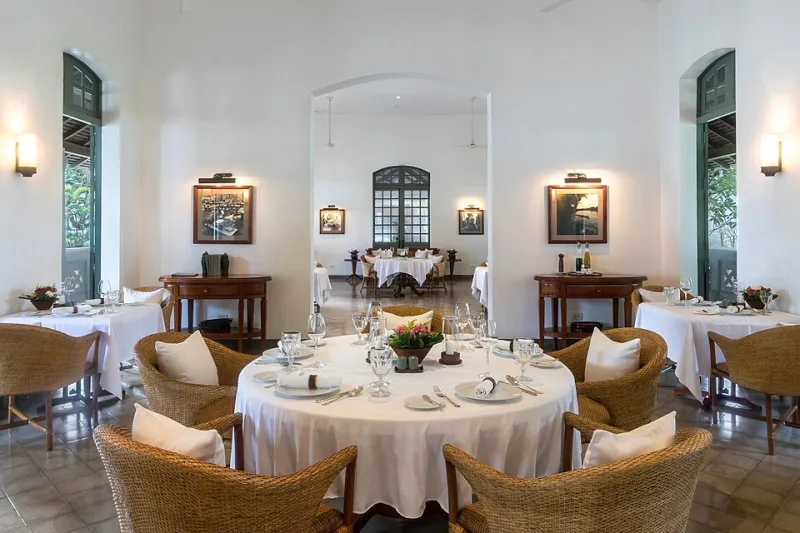
Photo: Basile Morin, CC BY-SA 4.0, via Wikimedia Commons
There is a reason you feel inexplicably calm the moment you step into a certain room, or why a particular hallway in a grand estate seems to sharpen your focus and quiet the noise of a demanding day. It is not coincidence. It is design — deliberate, research-backed, and increasingly the hallmark of truly elite residential architecture.
For the most discerning homeowners, interior design has transcended aesthetics. It has become a form of emotional engineering, a quiet science practiced by the world's foremost designers and validated by an emerging body of neuroscientific research. At VIP Moods, we believe your environment is not merely a backdrop to your life — it is an active participant in it.
The Neuroscience Behind Your Living Room
Dr. Eve Edelstein, a neuroscientist who has collaborated with architectural firms on human-centered design, has long argued that the built environment exerts a measurable influence on cognitive function and emotional regulation. Her research, along with studies from the Academy of Neuroscience for Architecture (ANFA), demonstrates that spatial proportions, ambient light levels, and even ceiling height can modulate cortisol production — the hormone most closely associated with stress.
High ceilings, for instance, have been shown to promote abstract thinking and a sense of freedom, while lower, more intimate ceiling planes tend to encourage focused, detail-oriented cognition. It is no accident that the grandest drawing rooms in American estate design favor soaring vaulted geometries, while private studies and reading nooks are deliberately cocooned and compressed.
"Every surface, every material, every angle communicates something to the nervous system," notes renowned New York-based designer Vicente Wolf, whose portfolio spans some of the most celebrated private residences on the East Coast. "When I walk into a space and something feels off, it is almost always a conversation between the room and the body that has gone wrong."
Color as Emotional Architecture
Perhaps no design element is more psychologically potent — or more frequently misunderstood — than color. Chromotherapy, the therapeutic application of color to influence mood, has roots in ancient Egyptian and Chinese healing traditions, and it is now finding renewed relevance in luxury residential projects from the Hamptons to Beverly Hills.
Warm terracotta tones and deep amber hues evoke a primal sense of safety and warmth, making them particularly effective in entertaining rooms where social connection is the primary goal. Conversely, the soft blue-green palette that characterizes many high-end coastal retreats is not merely a nod to the surrounding seascape — it actively suppresses the sympathetic nervous system, lowering heart rate and inviting a state of contemplative ease.
Interior designer Kelly Wearstler, whose residential projects command some of the highest fees in the industry, has spoken extensively about her process of building a "chromatic narrative" throughout a home — a curated progression of color temperatures that guide the emotional journey from public to private spaces. In one celebrated California estate, she orchestrated a deliberate shift from charged, saturated jewel tones in the formal reception areas to pale, almost luminous neutrals in the master suite, effectively choreographing the homeowner's psychological decompression from the moment of arrival to the moment of rest.
Light: The Most Powerful Design Tool of All
If color is the emotional vocabulary of a room, light is its grammar. The quality, direction, and temperature of light fundamentally alter how a space is perceived and how its occupants feel within it.
Circadian lighting systems — which automatically shift from energizing cool-white spectrums in the morning to warm, amber-toned illumination in the evening — are now standard specifications in premium residential builds across the country. Lutron's Ketra system, favored by designers working on ultra-high-net-worth projects, can replicate the full arc of natural daylight within an interior, synchronizing the home's atmosphere with the body's biological rhythms.
Natural light, however, remains irreplaceable. Architect Peter Marino, celebrated for his work on some of America's most prestigious private homes, is known for his meticulous orchestration of fenestration — the placement and proportion of windows — to ensure that light enters a room at precisely the angle and intensity that serves its intended emotional purpose. In one documented Aspen residence, Marino specified floor-to-ceiling north-facing glazing in the primary living areas to deliver the steady, diffused luminosity prized by artists, creating an environment of sustained clarity and creative calm.
Material Honesty and Tactile Intelligence
The materials that constitute a luxury interior speak to the senses in ways that go far beyond the visual. The cool, grounding weight of honed marble underfoot, the subtle acoustic dampening of hand-woven wool textiles, the organic warmth of aged walnut paneling — these are not merely statements of financial investment. They are sensory communications that orient the nervous system and establish a sense of permanence and trust.
Psychologist and environmental design researcher Dr. Sally Augustin notes that natural materials consistently outperform synthetic alternatives in studies measuring perceived comfort and psychological restoration. "There is something deeply atavistic about our response to wood, stone, and natural fiber," she explains. "These materials carry an evolutionary familiarity that synthetic surfaces simply cannot replicate."
This principle is reflected in the resurgence of artisanal craftsmanship within ultra-luxury interiors — hand-plastered walls with their subtle organic variation, bespoke bronze hardware with its living patina, reclaimed timber with its embedded history. These elements introduce what designers call "material honesty," a quality that communicates authenticity and invites a corresponding emotional authenticity in the people who inhabit the space.
Spatial Flow and the Psychology of Movement
The sequence of spaces through which one moves within a home — the choreography of arrival, transition, and arrival again — constitutes what architectural theorists call spatial flow. In the finest luxury residences, this flow is as deliberately composed as a piece of music, with moments of compression and release, of darkness and illumination, of enclosure and expansive openness.
A celebrated Malibu estate designed by AD100 architect Olson Kundig illustrates this principle with exceptional clarity. The approach to the main living pavilion requires passage through a deliberately narrow, low-ceilinged entry corridor before opening, with sudden drama, into a soaring, glass-fronted great room commanding unobstructed Pacific views. The psychological effect — a release of breath, a lifting of the spirit — is entirely intentional, and entirely measurable.
Principles You Can Apply Today
For those considering a significant residential project or even a targeted refresh of existing spaces, the following design principles, drawn from both expert practice and empirical research, offer a meaningful starting point.
Invest in layered lighting. Replace single overhead fixtures with a minimum of three light sources per room — ambient, task, and accent — and incorporate dimmer controls throughout. The ability to modulate light levels grants you direct command over the emotional register of any space.
Commit to a chromatic narrative. Rather than selecting colors room by room, develop a whole-home palette that tells an intentional emotional story, moving from stimulating to restorative as you progress from public to private areas.
Prioritize natural materials at points of contact. The surfaces your hands and feet touch most frequently — flooring, countertops, door hardware — deserve the highest investment in material authenticity. Stone, solid wood, and natural textiles at these junctures will deliver a disproportionate return in daily sensory satisfaction.
Respect the power of negative space. The world's most sophisticated interiors are not the most filled. Restraint — the deliberate preservation of visual quiet — is among the most powerful tools available to the discerning homeowner.
Your home is, ultimately, the most intimate expression of your values and aspirations. Approached with the rigor and intentionality these principles demand, it becomes something far greater than a residence. It becomes a daily practice in elevated living.