The Undocumentable Life: Why America's Most Refined Tastemakers Are Trading Trophies for Transcendence
There is a particular kind of satisfaction that resists documentation. It lives in the silence after a string quartet finishes playing in a candlelit cellar. It settles into the body during an hours-long conversation with a master perfumer who has agreed, by private arrangement, to craft a single scent for one individual and no one else. It arrives, unbidden, at the close of a wilderness immersion designed not for adventure but for stillness. This satisfaction cannot be photographed, captioned, or shared. And for a growing segment of America's most affluent consumers, that is precisely the point.
The shift is subtle but unmistakable. Among those who have long possessed the means to acquire virtually anything, the most coveted pursuit has become something altogether less tangible: the cultivation of a life defined by its interior quality rather than its outward appearance.
From Display to Depth
For decades, the grammar of luxury was largely visual. The watch on the wrist, the address on the letterhead, the destination tagged in a social post—these were the markers by which taste was communicated and status was confirmed. Acquisition was the primary verb, and visibility was its natural consequence.
What is emerging now among America's most discerning households is something fundamentally different. Luxury consultants and private experience curators working with clients in cities such as New York, San Francisco, and Chicago report a consistent pattern: high-net-worth individuals are increasingly directing discretionary spending away from objects and toward what one might call mood architecture—the deliberate construction of emotional states through carefully engineered experience.
"The clients who are most sophisticated right now are asking a completely different question," notes one New York-based lifestyle curator who works exclusively with a private roster of ultra-high-net-worth individuals. "They're not asking what they can have. They're asking how they want to feel—and what it will take to actually get there."
The Private Performance Economy
One of the most telling expressions of this shift is the rise of intimate, invitation-only live performance as a premium luxury offering. These are not events in the conventional sense. There are no guest lists published, no photographers in attendance, no social media activations. A celebrated jazz pianist performs for fourteen guests in a private Manhattan townhouse. A Pulitzer Prize-winning poet reads new, unpublished work to a gathering of eight in a Malibu clifftop residence. A contemporary choreographer stages a twenty-minute piece in a client's personal gallery space, performed once and never repeated.
The value proposition here is not exclusivity in the traditional sense—it is irreproducibility. These moments exist fully and only in the experience of those present. They leave no artifact. They generate no content. What they generate, instead, is a particular quality of presence and emotional resonance that participants describe as among the most meaningful experiences of their lives.
This is mood as investment. And the returns, while immeasurable by conventional metrics, are deeply felt.
Bespoke Wellness as Interior Design
The same logic is reshaping the landscape of high-end wellness. The most sought-after retreats among America's affluent class are no longer defined by their amenities or their Instagram aesthetics. They are defined by the precision with which they are tailored to a single individual's psychological and emotional profile.
Leading practitioners in this space—working at the intersection of neuroscience, somatic therapy, and traditional healing modalities—now offer engagements that begin months before a client arrives at any physical location. Detailed consultations map emotional patterns, stress architectures, and the specific sensory environments in which a particular individual tends to flourish. The resulting retreat is, in effect, a custom-designed emotional intervention: a few days or weeks built entirely around moving one person from a specific interior state to a more elevated one.
Some of the most exclusive versions of these offerings take place not at established properties but in privately arranged settings—a restored hacienda in the New Mexico high desert, a working farm in Vermont's Northeast Kingdom, a coastal compound in Maine accessible only by water. The location is chosen not for its prestige but for its resonance with the individual's particular psychological needs.
The experience is, by design, deeply personal and largely unshareable. Which is, increasingly, the entire appeal.
Creative Collaboration as Emotional Currency
Perhaps the most rarefied tier of this emerging economy involves invitation-only creative collaborations between ultra-affluent patrons and working artists, designers, or thinkers. These are not commissions in the traditional sense. They are genuine creative partnerships—extended dialogues between a patron and a creator that unfold over months or years, producing not a finished object but a shared intellectual and emotional journey.
A collector in Los Angeles describes spending eighteen months in regular conversation with a novelist she admires, exploring questions of memory, inheritance, and identity—conversations that shaped her own thinking in ways she credits as transformative. No book was produced. No public acknowledgment was made. The experience existed entirely between the two participants, and its value, she insists, is incalculable.
This model—sometimes called experiential patronage in the rarefied circles where it circulates—represents a meaningful departure from the trophy-acquisition model that has historically characterized high-end art collecting. The goal is not to own something. The goal is to become something: more thoughtful, more emotionally attuned, more fully alive to the texture of one's own inner life.
Mood as the Ultimate Marker of Taste
What unites these varied expressions—the private performance, the bespoke retreat, the creative dialogue—is a single underlying conviction: that the quality of one's inner life is the most meaningful measure of how one is actually living.
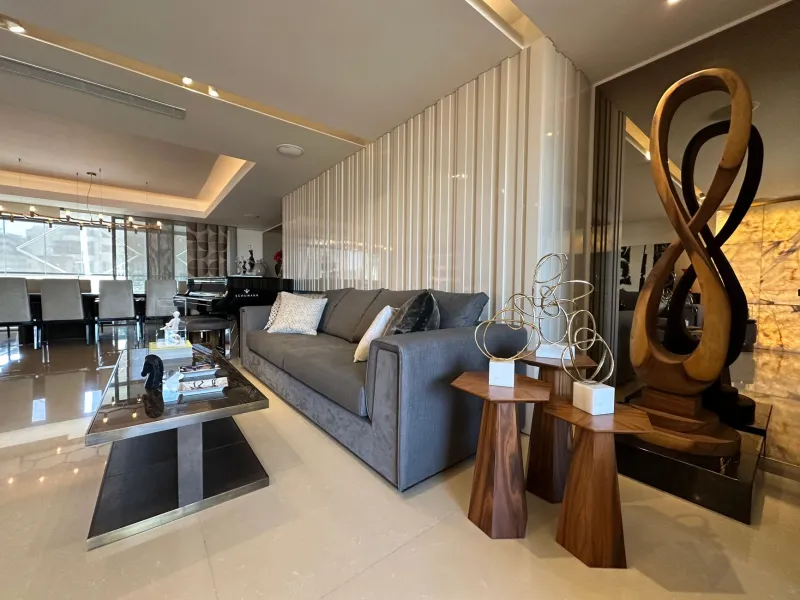
This is not a rejection of material beauty. The homes in which these experiences unfold are, in many cases, extraordinary. The wines poured, the linens pressed, the flowers arranged—all of it reflects a sensibility of the highest order. But these material elements have been repositioned. They are no longer the point. They are the setting in which the real work—the cultivation of genuine emotional richness—takes place.
For VIP Moods, this evolution feels both natural and significant. The pursuit of elevated living has always been, at its most honest, a pursuit of elevated feeling. What the most discerning among us are now recognizing is that the most reliable path to that feeling runs not through the showroom or the auction house, but through the quiet, careful architecture of experience itself.
The mood, it turns out, was always the destination. The most sophisticated among us are simply the first to book the journey directly.