The Quiet Architects: How America's Most Private Fortunes Are Redefining Cultural Power
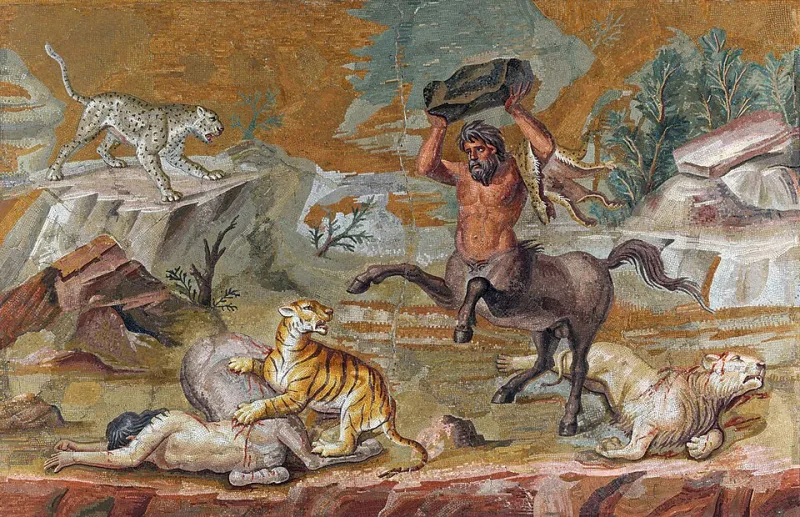
Photo: Unknown Details on Google Art Project, Public domain, via Wikimedia Commons
The name on the wing is rarely the whole story.
In cities from New York to Los Angeles, from Chicago to Houston, a discreet transformation is underway within the institutions that define American cultural life. The museums, opera houses, independent film festivals, and experimental theater companies that shape how a society understands itself are increasingly being guided—financially, philosophically, and in some cases programmatically—by a cohort of ultra-high-net-worth individuals whose names rarely appear in the press and whose influence is, by design, largely invisible to the public they are quietly serving.
This is not the philanthropy of the Gilded Age, conducted with ostentatious fanfare and marble facades bearing family names in carved serif letters. It is something more nuanced, more strategically sophisticated, and considerably more consequential.
From Checkbook to Chairmanship
The most significant shift in elite cultural patronage over the past decade has been the movement from passive financial support to active institutional engagement. Where previous generations of wealthy donors were content to fund endowments and attend galas, today's ultra-high-net-worth patrons are seeking—and obtaining—meaningful influence over institutional direction.
Board positions at major cultural institutions have always carried social prestige, but they now carry something more valuable: curatorial adjacency. Donors who occupy senior board roles at institutions such as the Metropolitan Museum of Art, the Sundance Institute, or the Kennedy Center are not merely lending their names to letterhead. They are participating in conversations about acquisitions, programming decisions, artistic commissions, and long-term strategic vision.
For many of these individuals, the appeal is partly intellectual and partly experiential. Access to artists, curators, and creative directors—the kind of unmediated conversation that no public ticket can purchase—represents a form of cultural currency that money alone cannot directly buy. It must be cultivated through sustained institutional investment and the trust that investment generates over time.
The Architecture of Private Access
Beyond boardrooms, the most coveted dimension of elite cultural patronage is the private experience layer that substantial giving unlocks. At institutions across the country, major donors enjoy a parallel relationship with art and performance that exists entirely outside public view.
Private viewings before a major exhibition opens to the public. Intimate dinners with visiting artists in gallery spaces cleared of all other guests. Backstage access at world-class performances. Early acquisition previews at art fairs before works are made available to the broader collector market. These are not perquisites incidental to the act of giving—for many donors, they represent the primary value proposition of institutional philanthropy.
Several major American art fairs, including those operating in New York and Miami, have formalized this dynamic through tiered VIP programs that grant the highest-level participants access to collector previews, private dealer presentations, and curated studio visits that are never advertised publicly. The experience economy, it turns out, operates at its most refined within the philanthropic sector.
Narrative Stewardship and the Shaping of Cultural Memory
Perhaps the most consequential—and least discussed—dimension of ultra-wealthy cultural patronage is its influence on the stories institutions choose to tell. Museums, in particular, are not neutral archives. They are argument-making machines, and the arguments they make are shaped in part by the priorities of those who fund their operations.
This reality is neither new nor inherently problematic. The tension between institutional independence and donor influence is as old as the Medici. What has changed is the sophistication with which contemporary patrons navigate this dynamic, and the degree to which the most thoughtful among them approach cultural investment as a form of legacy architecture.
Families who establish dedicated foundations to support specific curatorial areas—American modernism, Indigenous art practices, documentary film—are not simply expressing aesthetic preferences. They are ensuring that their intellectual and cultural values are embedded within institutions that will outlast them by generations. The Broad in Los Angeles, the Crystal Bridges Museum of American Art in Bentonville, Arkansas, and the recently expanded Menil Collection in Houston each represent a distinct vision of what American culture is and ought to become—visions that originated in private conviction and were realized through private capital.
The Film Festival as Cultural Salon
Outside the museum world, independent film festivals have emerged as a particularly fertile arena for elite cultural patronage. Sundance, Tribeca, and a constellation of smaller regional festivals have attracted significant investment from ultra-high-net-worth individuals who recognize that cinema occupies a unique position in the cultural landscape—simultaneously mass-market and avant-garde, accessible and aspirational.
For donors operating at this level, festival involvement offers something the museum world rarely can: speed. A film can be commissioned, produced, premiered, and distributed within a timeframe that feels responsive to the present moment. Patrons who fund documentary projects or support emerging filmmakers through festival-affiliated grant programs are participating in the creation of cultural artifacts in real time—a form of creative engagement that many find more immediately satisfying than the slower rhythms of institutional museum support.
The private screenings, filmmaker dinners, and invitation-only programming that surround major festivals represent a social infrastructure as carefully curated as any gallery installation—and for the patrons who inhabit it, equally meaningful.
Dynasty, Legacy, and the Long Game
What unifies these varied expressions of cultural patronage is a temporal orientation that distinguishes ultra-high-net-worth giving from more conventional philanthropic behavior. The individuals reshaping American cultural institutions are not primarily motivated by tax efficiency or social visibility. They are playing a generational game.
The establishment of named professorships, endowed curatorial positions, and perpetual acquisition funds ensures that a family's cultural influence compounds over time in a manner that financial assets alone cannot replicate. A portfolio can be dissipated; a named chair at a great institution persists through market cycles, political shifts, and the erosion of public memory.
This is, in the most literal sense, the construction of dynasty—not through hereditary title or political appointment, but through the patient, strategic investment of private capital in the institutions that define what a civilization values and remembers.
For those who understand how it operates, it is among the most elegant expressions of long-term thinking available to the genuinely affluent. And it unfolds, almost entirely, behind closed doors.