Behind Closed Doors: The New Golden Age of America's Most Coveted Private Clubs

Photo: tony quilty, CC BY-SA 2.0, via Wikimedia Commons
The velvet rope, as a cultural symbol, has never entirely gone out of fashion. But in the current moment, something considerably more sophisticated than a length of cord separates America's most exclusive private clubs from the world beyond their thresholds. What stands between the aspirant and the admitted is a process of selection so deliberate, so psychologically attuned, and so unapologetically rigorous that membership itself becomes one of the most meaningful signals of social standing available to the contemporary high-net-worth individual.
This is the new golden age of the American private club — and it looks nothing like the dusty, wood-paneled institutions of the mid-twentieth century.
A Renaissance, Reframed
The private club, as an institution, endured a prolonged period of cultural suspicion in the latter decades of the twentieth century. Associations with exclusion, insularity, and demographic homogeneity rendered many establishments unfashionable, even among the affluent audiences they had historically served. Membership rolls thinned. Grand old clubhouses fell into disrepair or were converted to other uses.
What is unfolding now is something altogether different: a conscious reinvention of the form, executed with the design intelligence, brand sophistication, and psychological intentionality of the world's finest luxury hospitality operations. The clubs attracting the most coveted memberships in cities such as New York, Los Angeles, Miami, and Chicago are not trading on legacy alone. They are building new cultures — communities engineered with as much precision as the finest resort or the most celebrated restaurant.
The waiting lists, in many cases, stretch to a decade or beyond. The initiation fees, at the most selective establishments, can exceed one hundred thousand dollars before annual dues are considered. And still, demand intensifies.
The Architecture of Atmosphere
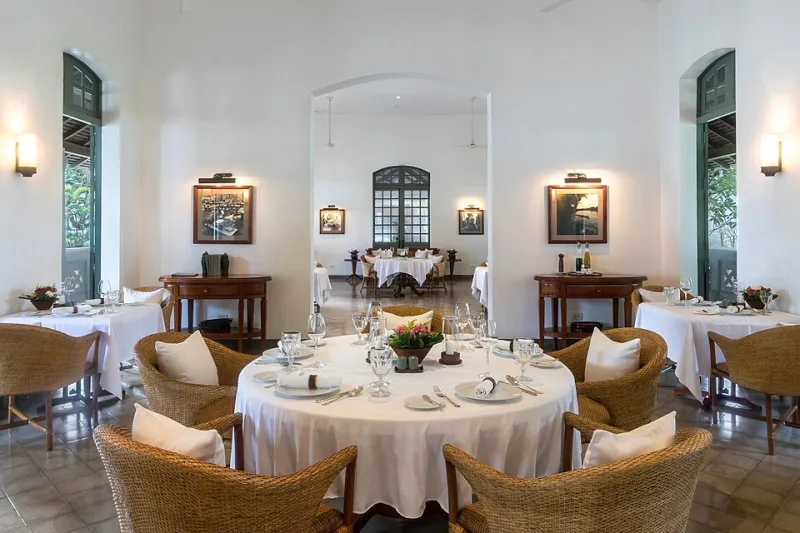
Step inside Rao's in New York — not the restaurant, but the private dining arrangements that accompany it — or gain access to the inner sanctum of the Knickerbocker Club on Fifth Avenue, and one immediately understands that atmosphere is not incidental to these institutions. It is the product.
The most forward-thinking clubs operating today invest in what hospitality designers call "emotional programming" — the deliberate calibration of physical space to produce predictable psychological responses in those who inhabit it. Lighting levels are tuned not merely for aesthetics but to promote the specific social energy the club wishes to cultivate. Acoustic engineers are engaged to ensure that conversation flows freely without the cacophony that plagues lesser establishments. Art collections are curated not to impress but to create a sense of continuous discovery and intellectual stimulation.
At the wellness-focused end of the spectrum, establishments such as Remedy Place — which operates private membership tiers in New York and Los Angeles — have taken emotional engineering even further. Their spaces are designed around biometric principles: materials chosen for thermal comfort, circadian lighting systems, air filtration to measurable clinical standards. The mood being cultivated here is not social vivacity but restorative calm — a state of physical and psychological optimization that members describe as qualitatively different from anything achievable in a conventional spa or gym.
The Selection Process: More Than a Background Check
Perhaps no aspect of the elite private club experience is more discussed — or less publicly understood — than the membership selection process. At the most selective institutions, the process bears closer resemblance to a doctoral candidacy review than to an application form.
At clubs operating within the tradition of the great American city clubs — the Metropolitan in New York, the California Club in Los Angeles, the Chicago Club — sponsorship by multiple existing members remains the foundational requirement. But sponsorship alone is rarely sufficient. Candidates are evaluated on the basis of their perceived contribution to the club's social ecosystem: whether their professional background, intellectual interests, and interpersonal character will enrich the community rather than merely benefit from it.
This distinction — between those who give to a culture and those who merely consume it — is, according to membership directors willing to speak candidly, the single most important determinant of selection. A nine-figure net worth is, at many of these institutions, essentially table stakes. What is genuinely scarce, and therefore genuinely valued, is the quality of presence.
More recently established clubs, particularly those targeting a younger generation of ultra-high-net-worth professionals, have introduced additional layers of evaluation. Some conduct informal social interviews across multiple occasions, observing candidates in unscripted settings before any formal vote is taken. Others solicit detailed written assessments from sponsors regarding the candidate's character under pressure — how they behave in adversity, how they treat those with less power than themselves.
Golf, Wellness, and the New Topology of Exclusivity
While the urban city club remains a cornerstone of American private membership culture, the geography of exclusivity has expanded considerably. The most sought-after golf club memberships in the country — Augusta National, Cypress Point, Seminole — operate on waiting lists that effectively function as lifetime designations. Entry, when it occurs, is less a commercial transaction than a form of social consecration.
But golf clubs represent only one quadrant of a much broader landscape. The wellness retreat as private membership destination has emerged as one of the most significant new categories. SHA Wellness Clinic's American partnerships, the membership tiers at Canyon Ranch's most exclusive properties, and the fully private medical wellness clubs appearing in Beverly Hills and Palm Beach all cater to an audience for whom the optimization of physical and cognitive performance is as serious a pursuit as financial portfolio management.
For this constituency, the value of membership is measured not in dining room access or golf handicaps but in biological outcomes: reduced inflammatory markers, improved sleep architecture, cognitive performance gains. The club, in this context, becomes a precision instrument for the engineering of personal excellence.
Social Capital as the True Currency
Beneath every conversation about initiation fees, waiting lists, and signature experiences lies a more fundamental truth about why ultra-selective private clubs endure and, in the present moment, flourish. The commodity they trade in is not physical space, food and beverage, or even networking access in the transactional sense. It is the quality of the social environment itself — the cumulative effect of being consistently surrounded by individuals of exceptional accomplishment, character, and ambition.
Research in social psychology consistently demonstrates that the people with whom one spends time exert a profound influence on cognitive outlook, behavioral norms, and even measurable life outcomes. The private club, at its finest, is an institution that takes this principle seriously — curating its membership with the same intentionality that a great museum applies to its collection.
For those who have achieved the financial means to access virtually any experience the world offers, this curated community becomes the rarest luxury of all: a reliable environment in which every interaction carries the potential for genuine elevation. The door, once opened, leads not merely to a room — but to a different quality of daily life.