The Invisible Architecture: How Ultra-Premium Fragrances Are Scientifically Crafted to Shape Your Inner World
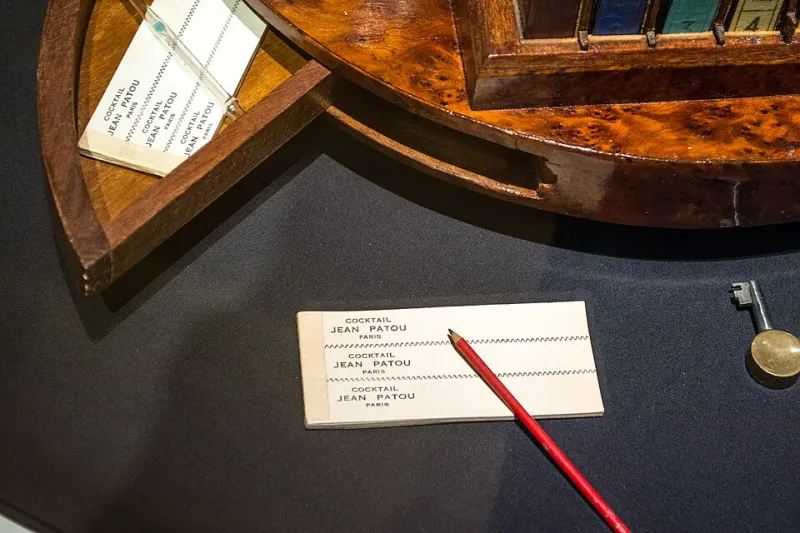
Photo: Tim Evanson from Cleveland Heights, Ohio, USA, CC BY-SA 2.0, via Wikimedia Commons
There is a moment — familiar to anyone who has uncapped a truly extraordinary perfume — when the world seems to reorganize itself. Tension loosens. Memory surfaces. Something ineffable shifts in the quality of the air. For the uninitiated, this might seem like romantic exaggeration. For the neuroscientist, it is entirely explicable. And for the master perfumer, it is the whole point.
The ultra-premium fragrance market, long the domain of quiet connoisseurs and old-world aristocracy, has entered a new era — one in which the boundary between sensory luxury and emotional engineering has all but dissolved. Houses such as Creed, Heeley, and Roja Parfums are no longer content to simply smell exceptional. They are crafting what might be described as invisible architecture: olfactory structures designed to alter mood, summon psychological states, and ultimately, redefine how their wearers experience themselves.
The Brain Behind the Bottle
To understand why a single inhalation can shift one's emotional register so dramatically, it helps to understand the unusual relationship between the nose and the brain. Unlike the other senses, which are routed through the thalamus before reaching higher cognitive centers, the olfactory system connects directly to the limbic system — the brain's emotional and memory hub. This anatomical shortcut means that scent bypasses rational filtering almost entirely, landing in the amygdala and hippocampus before conscious thought has had any opportunity to intervene.
Dr. Rachel Herz, a neuroscientist at Brown University and one of the foremost researchers in olfactory psychology, has described this pathway as "the most emotionally direct sensory route available to the human brain." In practical terms, it means that a carefully composed accord of bergamot, aged vetiver, and Haitian ylang-ylang does not merely smell pleasant — it can reliably induce measurable changes in cortisol levels, heart rate variability, and subjective emotional state.
For the perfumers who understand this, the implications are profound. The bottle on your dresser is not decoration. It is an instrument.
The Perfumer's Palette: Notes as Emotional Coordinates
At Maison Heeley, founded by James Heeley in Paris and celebrated among American collectors for its architectural minimalism and emotional clarity, the construction of each fragrance begins not with a brief for a particular scent, but with a question about feeling. What psychological terrain should the wearer inhabit?
Heeley has spoken at length about the deliberate emotional mapping that underlies his compositions. Cardamome 9, for example, was engineered to produce a state of alert tranquility — the mental clarity one associates with a cold morning in a clean, spare room. The cardamom provides cognitive stimulation; the white musk grounds the nervous system. The result is less a perfume than a calibrated mood state, bottled and made portable.
At Creed, the approach draws on over two and a half centuries of institutional knowledge. The house, which counts American presidents and European royalty among its historical clientele, approaches emotional resonance through the lens of heritage and materiality. Their use of rare natural ingredients — Florentine iris, Haitian vetiver, Bulgarian rose absolute — is not merely an exercise in quality. These materials carry what perfumers call "emotional weight": an inherent psychological gravity that synthetic alternatives cannot replicate. The olfactory memory of a true rose absolute, for instance, is far richer in psychological association than any laboratory-produced facsimile, triggering deeper limbic responses and more nuanced emotional textures.
The Bespoke Frontier: Fragrance as Personal Transformation
For the most discerning American clientele, the ready-to-wear fragrance — however rarefied — is no longer sufficient. The bespoke consultation has emerged as the ultimate olfactory luxury: a multi-session process in which a master perfumer crafts a wholly original composition around an individual's psychological profile, emotional aspirations, and even biometric data.
New York's most exclusive perfume consultants now offer experiences that begin with detailed interviews about the client's emotional landscape — moments of peak wellbeing, recurring stress patterns, aspirational states of mind — before a single ingredient is selected. Some practitioners incorporate psychometric assessments. Others work in collaboration with therapists or performance coaches, treating the final fragrance as a tool for behavioral and emotional anchoring.
The investment is considerable. Fully bespoke compositions from recognized houses can command fees ranging from fifteen thousand to well over one hundred thousand dollars, depending on the rarity of materials and the depth of the process. For clients who regard their emotional wellbeing as their most valuable asset, it is an entirely rational allocation.
The Collector's Compulsion: Why Rarity Matters
Beyond bespoke creation, a growing cohort of American fragrance collectors pursues rarity itself as a form of emotional currency. Limited-edition releases from houses like Roja Parfums — some produced in runs of fewer than one hundred bottles, using ingredients such as aged Mysore sandalwood or genuine ambergris — command prices that rival fine art at auction.
The psychology here is layered. On one level, rarity functions as status signaling, the olfactory equivalent of a Patek Philippe or a museum-quality Basquiat. But collectors consistently describe something more intimate: the sense that wearing a fragrance almost no one else in the world possesses creates a private emotional sanctuary. The scent becomes, in the language of psychology, a "transitional object" — a portable anchor to a specific and chosen emotional state.
This is, at its core, what separates ultra-premium fragrance from its mass-market counterpart. The latter offers a pleasant smell. The former offers a curated interior experience — a mood engineered with the same precision and intentionality that a great architect brings to a physical space.
Elevating the Ritual
Perhaps the most telling indicator of fragrance's ascent within the luxury lifestyle canon is the seriousness with which its rituals are now observed among high-net-worth Americans. Dedicated fragrance wardrobes — temperature-controlled, humidity-regulated, organized by emotional register rather than alphabetical order — are appearing in the residences of collectors from the Upper East Side to Bel Air.
The morning application of a considered scent has, for many, become as deliberate and meaningful as meditation or a carefully chosen breakfast. It is the first emotional decision of the day: a declaration of the interior state one intends to inhabit.
In this light, the true luxury of an exceptional fragrance is not its price, its provenance, or the rarity of its ingredients — though all of these matter. It is the quiet, daily power to shape one's own emotional world, one breath at a time.